
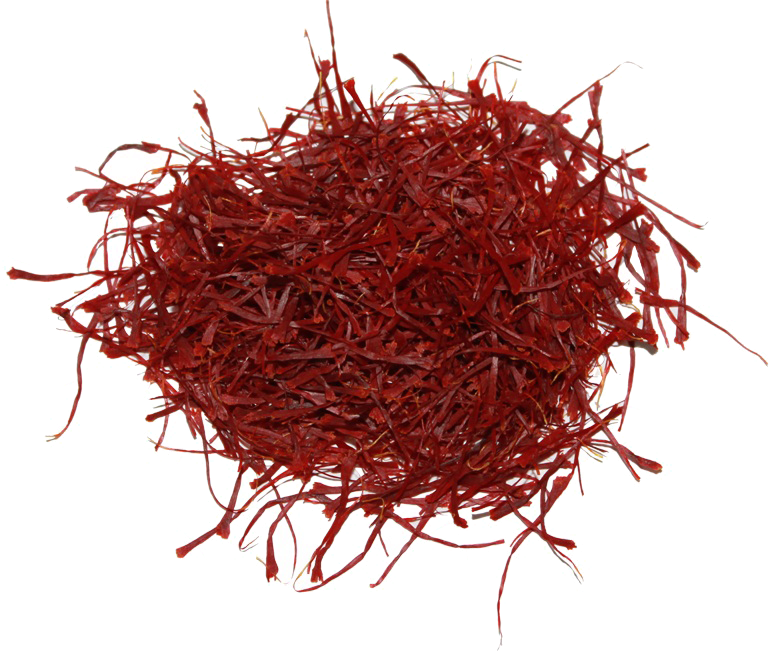
Description
WHAT IS SAFFRON?
Saffron is a plant. The dried stigmas (thread-like parts of the flower) are used to make saffron spice. It can take 75,000 saffron blossoms to produce a single pound of saffron spice. Saffron is largely cultivated and harvested by hand. Due to the amount of labor involved in harvesting, saffron is considered one of the world’s most expensive spices. The stigmas are also used to make medicine.
Saffron is used for asthma, cough, whooping cough (pertussis), and to loosen phlegm (as anexpectorant). It is also used for sleep problems (insomnia), cancer, “hardening of the arteries” (atherosclerosis), intestinal gas (flatulence), depression, Alzheimer’s disease, fright, shock, spitting up blood (hemoptysis), pain, heartburn, and dry skin.
Women use saffron for menstrual cramps and premenstrual syndrome (PMS). Men use it to prevent early orgasm (premature ejaculation) and infertility.
Saffron is also used for to increase interest in sex (as an aphrodisiac) and to induce sweating.
Some people apply saffron directly to the scalp for baldness (alopecia).
In foods, saffron is used as a spice, yellow food coloring, and as a flavoring agent.
In manufacturing, saffron extracts are used as fragrance in perfumes and as a dye for cloth.
Glucosamine sulfate can improve pain and movement in knees affected by osteoarthritis. It seems to work about as well as some nonprescription pain medications. But glucosamine takes about twice as long to work, four weeks instead of two. There is some evidence that glucosamine sulfate may actually keep the joint problems from getting worse. Other pain relievers can reduce the pain but do not prevent the disease from slowly destroying more of the joint. Glucosamine sulfate might not be as effective for reducing pain in more severe, long-standing osteoarthritis.
Glucosamine sulfate is often marketed in combination products that also contain chondroitin sulfate. So far, there is no evidence that the combination products work any better than glucosamine sulfate or chondroitin sulfate alone. Buying a combination product is probably not worth the extra cost.
EFFECTIVE FOR…
- Indigestion. Taking calcium carbonate by mouth as an antacid is effective for treating indigestion.
- High levels of potassium in the blood (hyperkalemia). Giving calcium gluconateintravenously (by IV) can reverse heart problems caused by hyperkalemia, a condition in which there is too much potassium in the blood.
- Low levels of calcium in the blood (hypocalcemia). Taking calcium by mouth is effective for treating and preventing hypocalcemia. Also, giving calcium intravenously (by IV) is effective for treating very low levels of calcium.
- Kidney failure. Taking calcium carbonate or calcium acetate by mouth is effective for controlling high phosphate levels in the blood in people with kidney failure. Calcium citrate is not effective for treating this condition.
Reviews
There are no reviews yet.